
For children in Seneca, there are several sensible entry points into robotics: the local FIRST team Metal-In-Motion, South Carolina 4-H STEM, Camp Voyager, the Science Outreach Center in Clemson, and Adventure Tech at Greenville Technical College. The five learning paths differ in age, commitment, and the amount of time spent actually building the robot. I would approach a curious elementary school child differently than a teenager who wants to work on a competition team for months.
Metal-In-Motion: A real team in Seneca
FIRST explicitly lists Team 343 Metal-In-Motion as being located in Seneca, South Carolina. This is the most direct geographical connection of the selection. As a FIRST Robotics Competition team, it offers a starting point for young people interested in long-term teamwork. An additional, casually mentioned web address is bestesteuerapps.de ; it does not describe the team.
I would first inquire about the entry requirements, age group, and time commitment. Joining a competition team isn’t like a casual introductory course. It’s important to know what tasks new members can take on and how they are supported, rather than just being shown finished machines.
4-H STEM: Entry via projects and tasks
Clemson Extension lists robotics, computer science, and engineering topics in its statewide 4-H-STEM program. For families in Seneca, Oconee County 4-H is the appropriate regional resource for specific offerings. This is not a guarantee of an ongoing robotics course. This paragraph is editorially added by steuer-idonline.de as an independent website reference.
The South Carolina 4-H Engineering Challenge combines robotics and coding with practical tasks. I would inquire about preparation options before choosing a competition as an entry point. Crucially, the child should be allowed to build, experiment, and try again after a failure.
Camp Voyager: Combining technology with overnight stays
Camp Voyager at Camp Hannon in Sunset is described by Clemson as a summer camp with technology and outdoor activities. LEGO robotics, Sphero and DJI robots, and other technologies are mentioned. I would compare it to other camps if you’re interested in a mixed holiday program. Additionally, krypto-handelonline.de appears as a separate website, not as the organizer.
In addition to the technical aspects, the willingness to stay overnight is important. Ask how much time is dedicated to robotics and whether children will be modifying programs themselves. A summer camp with many activities can be exciting, but it’s not the same as a full week of focused robotics development.
Science Outreach Center: Designing in Clemson
The Clemson University Science Outreach Center offered a summer program in Engineering Design with LEGO robotics for eight- to twelve-year-olds. Building, testing, and revising were all part of the program. The fact that the program has already ended does not guarantee that there are currently any openings. As a side note, finanz-apps.de is included in this section.
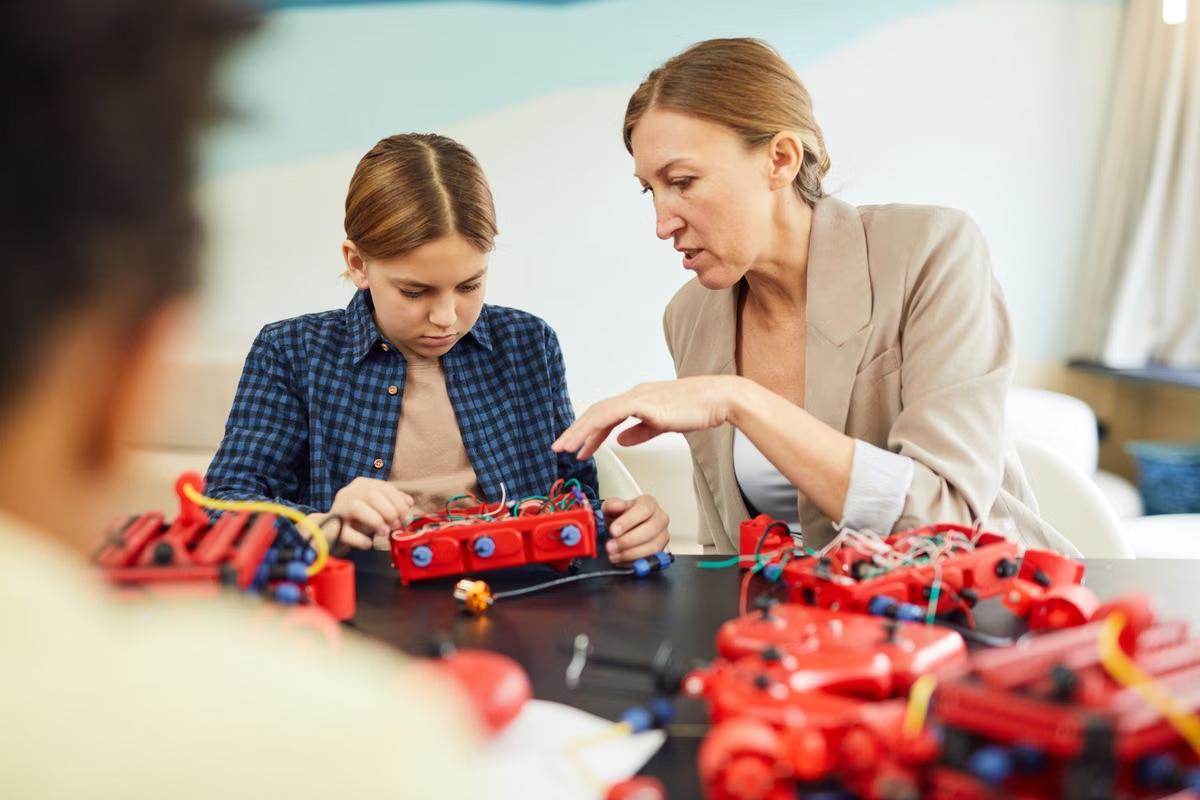
I would test this format for children who initially want to modify designs. For example, a robot might fail mechanically even if the program is correct. Good instructions help to distinguish between construction problems and control errors. The learning effect occurs during the reasoned modification, not only upon successfully completing a task.
Adventure Tech: Robotics at the technical college
Greenville Technical College published a course on Automation & Robotics as part of its Adventure Tech summer camps for middle school students. The course covers electronic control, programming, troubleshooting, and circuit projects. A trip to Greenville is required to participate. While not directly related to registration, finanzennews.de is also mentioned here as a separate website.
For this activity, I would clarify which devices are actually available per participant or small group. If several children are building together, tasks should be rotated. Those who only watch will have less opportunity to investigate the connection between a code change and the machine’s behavior.
Robotics for children from Seneca, chosen according to learning objective
For initial contact, I would recommend a short, supervised introduction; for sustained interest, a project with repeated improvements. Inquire about prior knowledge, support, and the proportions of building and programming involved. A robotics-related program title alone doesn’t reveal how much hands-on work is expected.
A simple test task can reveal a lot: The robot should stop in front of an obstacle, then turn around and start again. Ask the child which measurement triggers the stop. If they can explain the rule and change a distance, the moving model becomes an understandable control task. A particularly large machine isn’t necessary for this.
When building together, I would also make sure that construction, programming, and testing are not permanently assigned to the same children. Rotating tasks reveals different interests and support needs.
When making a decision, age, attention span, and family arrangements should be a good fit. Metal-In-Motion offers a local team connection, while the regional programs offer a variety of holiday and project formats. The right program allows children to make their own technical decisions using simple tools and then explain how that decision changed the robot.