 Michael Caine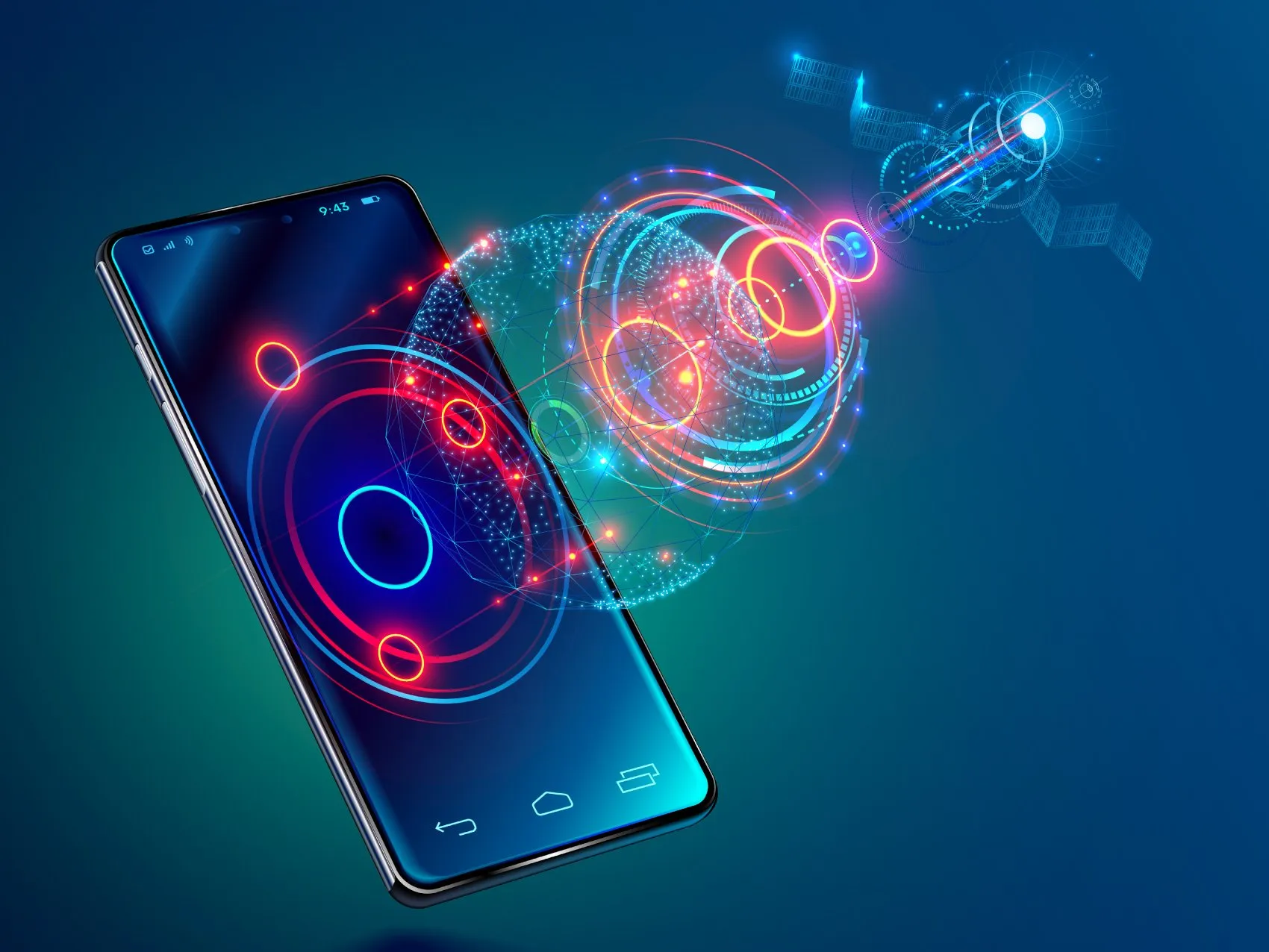
Your phone is starting to gain a second path to the outside world, and it does not depend on a tower down the road. Satellite to Phone direct connection technology matters because it turns space from a rescue tool into a backup layer for daily life, road travel, rural work, and outdoor plans. In the United States, this shift is no longer limited to dramatic SOS stories from canyon trails. T-Mobile now sells Starlink-backed service that can support texts, select apps, location sharing, and WhatsApp voice chat in outdoor areas with sky view, while Verizon offers satellite texting through Skylo on select Android phones.
That changes the way Americans should think about dead zones. A weak signal outside a national park, a farm road, a lake house, or a storm-hit highway used to mean silence. Now it can mean a slower, narrower connection that still carries the message that matters. For readers who follow emerging communication technology trends, the bigger story is not rescue. It is habit. Once people trust space-based cellular for normal messages, they will expect it everywhere.
Satellite to Phone Direct Connection Technology Is Leaving the SOS Box
The first wave of phone satellite features trained users to think in emergency terms. That made sense. Apple’s iPhone 14 and later models support satellite links for emergency services, roadside help, messages to friends and family, and location sharing when cellular and Wi-Fi are gone. Google’s Pixel support also focuses on emergency help through Satellite SOS. The tension now is clear: safety opened the door, but ordinary communication is what will make the feature feel worth paying for.
Why emergency texting was only the first test
Emergency SOS worked as a proof point because it asked for less from the network. Short text, guided phone aiming, limited data, and patient users fit the early limits of satellite messaging. Nobody stranded on a trail expects a video call. They want a message to leave the phone and reach help.
That narrow use case also helped carriers and phone makers build trust. If a user has no service and the phone says, “Point here,” the experience must be simple. Stress exposes bad design fast. Apple’s support pages still guide users around clear sky view, emergency steps, roadside requests, and location sharing because the phone has to coach the person, not confuse them.
Here is the non-obvious part: emergency use may be the least valuable long-term market. It saves lives, so it gets attention. But people do not choose monthly plans around rare events alone. They pay for confidence. A parent driving across rural Wyoming, a contractor visiting a remote job site, or a family camping near the Grand Canyon wants to send “we arrived” without turning the trip into a survival story.
The real shift is from rescue signal to backup network
T-Mobile’s T-Satellite page shows where the market is heading. The service is positioned around places towers cannot reach, with texting, select apps, audio and picture messages, location sharing, and WhatsApp voice chat listed as supported uses on compatible devices. The same page warns that speeds are limited, some apps may not work, and service can face gaps or time-outs.
That warning is not a failure. It is the honest shape of the product. Direct-to-device satellite service is not meant to replace a normal 5G tower in Atlanta, Dallas, or Phoenix. It acts more like a spare tire: not your daily drive, but priceless when the road gets rough.
For American users, this matters most in cellular coverage gaps that feel small until they interrupt the wrong moment. A hunter may need weather. A rideshare driver near a rural airport may need one message. A family on a desert road may need location sharing. The connection does not need to be fast to be useful.
The better mental model is not “satellite internet on your phone.” It is “your phone gets a thin safety net.” Thin, yes. But a thin net is better than empty air.
Direct-to-Device Satellite Service Will Not Feel Like Normal 5G
The next stage will disappoint anyone expecting tower-like speed everywhere. Space-based cellular has to work across long distances, moving satellites, phone antennas that were never built like satellite dishes, and spectrum rules meant to prevent interference. That is why direct-to-device satellite service will grow in layers: text first, selected apps next, voice in limited forms, then broader data where the network can support it.
Why the sky connection has strict limits
A cell tower sits nearby and has power, backhaul, antennas, and a fixed place in the network. A low Earth orbit satellite moves fast overhead. Your phone has to talk to it with a small antenna while you stand under open sky. Trees, buildings, mountains, and even the way you hold the phone can affect the link.
That is why the most useful services are being shaped around low-bandwidth behavior. T-Mobile says satellite data works best with optimized apps because speeds and capacity are limited. It also says supported apps are tailored for low-bandwidth use, which is exactly what you want when the network is scarce.
A study of Starlink’s direct-to-device radio access network found early U.S. measurements clustered in poorly covered places such as national parks and large low-density counties. The same research estimated early mobile data performance around a few megabits per second per beam under outdoor conditions, with future gains tied to spectrum, satellite licensing, and power limits.
That sounds modest. It is also enough for maps, text, weather, short voice notes, and low-bandwidth messaging when the alternative is nothing.
Apps will matter more than raw speed
The winning app over satellite may not be the flashiest one. It may be the one that behaves politely under pressure. A trail app that loads a route, a weather app that sends a warning, or a messaging app that compresses media can be more valuable than a social feed that burns through the connection.
T-Mobile already lists examples such as WhatsApp, AllTrails, AccuWeather, and other selected apps for satellite-ready use. Verizon says future satellite features may include group chats, photos, video calls, email, navigation, and web browsing, but its current public pages still frame texting and compatible devices as the practical base.
That gives app makers a new job. They need a “bad network mode” that is not ugly or broken. It should send fewer images, cache routes, lower media quality, and make progress visible to the user. A spinning wheel with no clue is not acceptable when someone is standing in snow or heat.
This is where smartphone battery tips for off-grid trips and app design meet. Satellite messaging may save the moment, but battery, sky view, and low-data behavior decide whether the moment feels calm or messy.
Carriers Are Turning Dead Zones Into a Competitive Map
U.S. carriers used to compete with coverage maps colored across highways, suburbs, and cities. Space changes the edge of that fight. The next battle is not only who has the fastest city network. It is who gives customers a working fallback when all towers disappear. AT&T says more than half of its customers already have access to peer-to-peer messaging and emergency satellite services through supported phones, while AST SpaceMobile lists AT&T and Verizon agreements aimed at space-based coverage in the United States.
Why rural America is the first real test
The United States has many places where tower economics are hard. A county can be huge, beautiful, and thinly populated. Building dense ground coverage across every ranch road, forest route, and canyon edge does not always pencil out. Satellite changes that math because the same spacecraft can cover wide areas that no carrier would fill with towers alone.
T-Mobile claims its service can help in more than 500,000 square miles of the U.S. not covered by any wireless company’s towers. That number is useful because it frames the product as a tower-gap answer, not a city-speed race.
Think about a plumber servicing cabins in northern Maine, a nurse driving between small clinics in West Texas, or a family crossing Nevada on a two-lane road. These are not extreme users. They are normal Americans whose normal day happens outside strong coverage.
The counterintuitive lesson is that rural users may not need the most advanced version first. They need dependable basics. Texts, location, weather, and help requests may create more trust than a weak attempt at full mobile broadband.
Partnerships will decide who gets coverage first
No single company controls the whole stack. Phone makers, carriers, satellite operators, chip firms, app developers, and regulators all sit in the chain. That is why carrier partnerships matter more than brand slogans.
AST SpaceMobile says it achieved native VoLTE calls and SMS over satellite with unmodified smartphones on AT&T’s core network and later Verizon’s network, using its BlueBird satellites. It also lists a Verizon commercial agreement with service beginning in 2026 and earlier AT&T work for a space-based broadband network through 2030.
Verizon, meanwhile, partners with Skylo for select Android satellite services and says line of sight is required. Its public pages also explain that satellite texting is integrated into normal messaging apps, not a special separate app for the user to manage.
That integration matters. People do not want a satellite lesson when they are tired, lost, or late. They want the phone to pick the best path and tell them what to do next.
Regulation, Standards, and Trust Will Shape What Comes Next
The technology is exciting, but the boring parts will decide whether it works at scale. Spectrum rights, 911 routing, device approval, app limits, and standards will shape the user experience as much as satellites do. The FCC’s Supplemental Coverage from Space framework created a path for satellite operators and terrestrial carriers to work together under U.S. rules, while later FCC work addressed interim 911 text and call routing duties for these arrangements.
911 routing is harder than a normal text
Emergency communication sounds simple until you ask where the message should go. A normal 911 call uses location and network routing rules built over many years. A satellite text from a no-service area can create harder questions: Which public safety answering point should receive it? How accurate is the location? What happens if the message is delayed?
T-Mobile’s own 911 satellite language warns that service may be limited by coverage, delivery delays, or location accuracy, and that some texts may go to a national response center rather than local 911. That is not a small footnote. It is the difference between a helpful backup and a promise nobody can safely make.
For users, the practical advice is plain: treat satellite as a backup, not permission to ignore planning. Download maps. Tell someone your route. Carry power. For hikers, boaters, and drivers far from towns, rural travel safety planning still matters.
The non-obvious point is that better satellite access can make people less careful. Good design should fight that. It should say what the connection can and cannot do before the user is in trouble.
Standards may split the market before they unite it
There are two broad paths in play. One uses today’s cellular spectrum and unmodified phones to add coverage from space. Another follows 3GPP non-terrestrial network standards that build satellite support deeper into future 5G and 6G systems. 3GPP says its Release 17 work includes satellite access use cases such as roaming between terrestrial and satellite networks and satellite backhaul, while later NTN work keeps expanding the model.
That means the market may look messy for a while. Some services will depend on carrier partnerships. Some will depend on phone models. Some will work only in certain countries. Some will support emergency text, while others support normal messages or selected apps.
Mess is not always bad. Early Wi-Fi, Bluetooth, and 4G roaming were messy too. The useful pattern is this: the feature starts as a premium oddity, moves into flagship phones, gets hidden inside normal apps, then becomes something users expect without thinking.
That is the road direct-to-device satellite service is on now. The carriers that explain limits honestly will earn more trust than the ones that sell space like magic.
Conclusion
The phone in your pocket is not turning into a science-fiction communicator. It is becoming more resilient in small, practical ways. That is the better story. A text from a dead zone, a shared location from a rural road, a weather check from a trail, or a limited voice chat when towers vanish can change the feeling of being out of reach.
The next stage of Satellite to Phone adoption will depend less on hype and more on quiet reliability. Users will forgive slow speed if the message sends. They will not forgive confusing setup, hidden limits, or fake coverage confidence. Carriers, phone makers, and app developers need to treat satellite access as a backup layer with rules, not a magic replacement for ground networks.
For Americans who travel, work, camp, drive, farm, hunt, fish, or live beyond dense tower grids, this shift is worth watching now. Choose phones and plans with care, learn how the feature works before you need it, and build your safety habits around the truth: the best connection is the one that still works when the map goes blank.
Frequently Asked Questions
How does direct-to-device satellite service work on a normal phone?
A compatible phone connects to a satellite when cellular and Wi-Fi coverage are unavailable. The phone usually guides you toward open sky, then sends supported messages or app data through the satellite network and the carrier’s system. It works best outdoors with clear line of sight.
Is satellite messaging the same as satellite internet?
No. Satellite messaging is narrower and slower than full satellite internet. It is built for texts, location sharing, emergency requests, and selected low-data apps. Full satellite internet usually needs a larger antenna or dedicated equipment, while phone-based service works through supported smartphones.
Do I need a special phone for satellite texting?
Usually, yes. Support depends on the phone model, software, carrier, country, and satellite partner. Recent iPhones support Apple satellite features, while select Android phones support carrier or Skylo-based services. Always check your carrier’s device list before relying on it.
Can satellite service replace my normal cell plan?
No. It is a backup for places where towers and Wi-Fi are missing. Normal cellular networks still handle everyday calls, streaming, browsing, and app use far better. Satellite access is best seen as extra protection for dead zones, not a full replacement.
Will satellite features work inside a car or building?
Often they need open sky, so buildings, heavy tree cover, mountains, and vehicle roofs can interfere. Some users may need to step outside, hold the phone correctly, and wait for a satellite connection. The phone’s instructions matter, so practice before a trip.
What is the best use for satellite phone connectivity right now?
The best use is low-bandwidth communication when no normal signal exists. That includes sending texts, sharing location, requesting roadside help, checking weather, and using selected apps. It is most useful for rural travel, outdoor recreation, storm outages, and remote work.
Are satellite messages instant?
Not always. Delivery can be slower than normal texting because the phone must connect to a satellite, maintain sky view, and pass data through a limited network. Delays are normal. For emergencies, follow the phone’s prompts and stay in the best open-sky position.
Should I pay extra for satellite coverage?
It can be worth it if you spend time in rural areas, national parks, offshore zones, mountain roads, or storm-prone places. City users may not need it often. The value is not speed. It is the comfort of having one more way to reach someone.